

ARE YOUR ‘IMMIGRATION DUCKS’ IN A ROW TO APPLY FOR INDEFINITE LEAVE TO REMAIN IN THE UK?

So, Tom, a South African national, is married to Sue who is a British citizen. They have no children and are both working and living in the UK. Tom wants to know if he is eligible for settlement (indefinite leave to remain) in the UK.
First, Tom will need to check if his current UK visa is based on being Sue’s partner (“partner” includes being a husband/wife, or civil partner, or in a relationship that’s like a marriage or civil partnership).
Tom must also prove that he and Sue have been living together since his last visa renewal and that he intends to continue this relationship after he applies.
Most commonly, persons like Tom must have been living in the UK for 5 years.
Note: In some instances, a 2-year or 10-year route may apply.
(Tip: See Home Office letter when ‘leave to remain’ was last approved).
Tom’s age falls between 18 and 64 years and he must therefore also show that he has passed the Life in the UK test and that he meets the English language requirements.
Tom’s application can be refused if for example, he has a criminal record in the UK or another country or provided false or incomplete information to the Home Office or broken UK immigration law.
Proof of finances:
Assuming Tom is on the 5-year route, he and Sue is likely to need to prove that he, or she, or they jointly, have at least £18,600 a year available to them (noting that they have no children). If they had a child, the amount would have been £22,400 a year and with more children £2,400 a year for each additional child they have.
As on the date of writing, the Home Office will charge Tom £2,389 for his application and an extra £800 if Tom wants to make use of the super priority service.

Daniel Dippenaar – Barrister Immigration Consultant 12 April 2019

British citizen BY DESCENT or British citizen OTHERWISE THAN BY DESCENT? And SUBSEQUENT GENERATIONS?

Simply put, if you have acquired British citizenship by birth in the UK, or by registration (as a child), or by naturalisation you are classified as a British citizen OTHERWISE THAN BY DESCENT. Your child will AUTOMATICALLY become a British citizen irrespective of where he/she was born (in or outside the UK).

However, if you were born outside the UK and relied on the fact that one or both of your parents is a British citizen to acquire British citizenship, you will be classified as a British citizen BY DESCENT. If your child is then also born outside the UK your child will NOT AUTOMATICALLY become a British citizen.

SUBSEQUENT GENERATIONS?

But, there is always a BUT somewhere isn’t there?

Second-generation children (i.e. grandchildren) born outside of the UK can in some circumstances be registered abroad at the British consulate as British citizens by descent.

Let’s use an example:
Thomas was born in Cape Town, South Africa in 2006 (now 13 years of age). Thomas’ dad, James, was born in Spain in 1975 and his mother, Sarah, is a German citizen. Thomas’ granddad, Larry, was born in London, England, in 1952.
So, in this example:
Granddad Larry is a British citizen otherwise than by descent.
Father James was born outside the UK before 1983 and is a British citizen by descent.
So, what about his son, Thomas? Thomas, also born outside the UK to a dad who is a British citizen by descent. In line with my general explanation above, Thomas will not automatically become a British citizen.

BUT, (and I warned there will be a BUT) if James (Thomas’ dad) had been resident in the UK before James was born for a continuous period of three years, not being absent for more than 270 days in that period, James will be able to be registered as a British citizen by descent in Cape Town at the British consulate! Because James is a child over 10, he will also have to satisfy the Secretary of State that he is of good character.

IN CONCLUSION, James is able to register outside the UK as a British citizen by descent even though he has never set foot in the UK, but because he has a father who is a British citizen by descent who was resident in the UK before James was born.

Note: If you have questions to ask and are in need of advice on UK immigration status matters, please send an email to info@depner-immigration.com

Daniel Dippenaar  1 February 2019

British citizen: Born OUTSIDE the UK?


I have previously written about the complexities of British Nationality law and the importance of the date; 1 January 1983 (after 1982):
Born IN the UK BEFORE 1983?
You are a British citizen.
Born IN the UK AFTER 1982, i.e. on or after 1 January 1983?
If one of your parents was at the time of your birth either a British citizen or settled in the UK, you are a British citizen.
These are the basic principles introduced by the British Nationality Act 1981.

But what if you were born OUTSIDE THE UK AFTER 1982?

If:
(a) One of your parents was a British citizen otherwise than by decent by birth in the UK, you are a British citizen.
(b) One of your parents registered or naturalised as a British citizen before your birth, you are a British citizen.

These are by no means the only way to be or to become a British citizen. I will in a later contribution deal with: British citizenship; subsequent generations?
Daniel Dippenaar  30 January 2019

Government outlines no deal arrangements for EU citizens

Home Secretary Sajid Javid has yesterday (28 January 2019) set out provisions for EU citizens coming to the UK after EU exit in the event of a no deal.
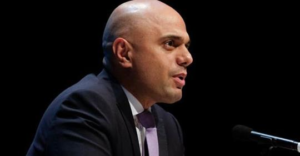
If Britain leaves the EU without agreeing a deal, the government will seek to end free movement as soon as possible and has introduced an Immigration Bill to achieve this. For a transitional period only, EEA citizens and their family members, including Swiss citizens, will still be able to come to the UK for visits, work or study and they will be able to enter the UK as they do now.
However, to stay longer than 3 months they will need to apply for permission and receive European Temporary Leave to Remain, which is valid for a further 3 years.
EU citizens wishing to stay for longer than 3 years will need to make a further application under the new skills-based future immigration system, which will begin from 2021.
Home Secretary Sajid Javid said:
“If we leave the EU without a deal we will continue to deliver on the referendum result and end free movement once and for all – giving us full control of our borders for the first time in decades.
However, we need to take a practical approach and minimise disruption to ensure the UK stays open for business. That is why we will introduce time-limited transitional arrangements and grant EU citizens coming after March 29 temporary leave.
Let me be clear. This policy does not apply to those here before exit day, whose rights to live and work will be protected by the EU Settlement Scheme. We want them to stay and value them hugely.”
The information set out yesterday also confirms that if there is no deal:
• EU citizens arriving in the UK who wish to stay longer than 3 months and apply for European Temporary Leave to Remain will be subject to identity, criminality and security checks before being granted permission to stay for three years
• non-EU family members who wish to accompany an EU citizen under these arrangements will need to apply in advance for a family permit
• EU citizens will be able to enter and leave the UK as they do now, using e-gates when travelling on a biometric passport
• the initial 3 months’ leave to enter for EU citizens will be free of charge but applications for European Temporary Leave to Remain will be paid for. Fees will be set out at a later date
• Irish citizens will not need to apply for European Temporary Leave to Remain and will continue to have the right to enter and live in the UK under the Common Travel Area
The Home Secretary has set out plans for a new single skills-based immigration system which will operate from 2021. It will enable employers to attract the skills they need from around the world, while ensuring net migration is reduced to sustainable levels.

Daniel Dippenaar, 29 January 2019

Post Brexit Earnings?

What the government would like EU migrants to earn after Brexit could turn out to be wishful thinking. Surely economic realities and needs of the UK will temper unrealistic expectations?

My advice to all concerned is typically British; ‘stay calm’ and ‘get on with it’!

Or if you are Afrikaans speaking; ‘wees rustig en kry jou eendjies in ‘n ry!’ Die VK het mannekrag (en vrouekrag) nodig – behoeftes sal daar altyd wees en op ‘n persoonlike noot; ‘waar daar ‘n wil is, is daar ‘n weg’.

If there is a way, at Depner Immigration Consultants will find one for you. Get in touch with us.

Daniel Dippenaar, 15 December 2018.


(Click on photo to read more.)

EU migrants must earn £30,000 to enter UK after Brexit in major CRACKDOWN on immigration

THERESA May’s Cabinet has outlined plans for a drastic crackdown on EU migrants after Brexit, according to reports. Once the UK leaves the European Union some EU migrants will be required to earn at least £30,000 before they are eligible to enter the country.

By Luke Walker, Sunday Express, 15 December 2018.