
UK SETTLEMENT: HOW ‘INDEFINITE’ IS YOUR INDEFINITE LEAVE TO REMAIN (ILR) STATUS?

As a note of caution, your approved UK settlement can be invalidated / revoked / taken away. Perhaps another good reason to secure your UK status by not delaying your application for British citizenship?

Generally, you must have been living in the UK for 12 months with ‘settled’ status before you can apply for British citizenship. If married to a British citizen when applying for citizenship you should, subject to meeting all other legal requirements, be able to apply immediately after being granted indefinite leave to remain.

For those who travel and remain abroad for long periods being absent from the UK it is important to know that your indefinite leave will AUTOMATICALLY, as a question of law, be lost if:
• if you stay outside of the UK for 2 or more years,
• if granted settled status under the EU Settlement Scheme) and you stay outside of the UK for 5 or more years.
• if you’re a Swiss citizen with settled status under the EU Settlement Scheme your indefinite leave will lapse if you stay outside the UK for 4 years or more in a row.

Depending on the reasons for your absence, you could potentially be eligible to apply for a new entry clearance visa as a ‘returning resident’. However, why take the risk of losing your ILR status in the first place?

Isn’t it better to hold a British passport in your hand (not having to travel abroad with a so-called ‘BRP’)? We suggest the answer is a definite YES.

Daniel Dippenaar
Barrister-Immigration Consultant, Founder Member
Regulated by the Bar Standards Board (Bar Council of England and Wales)

Tel : +44(0)333 200 5158
Email : info@depner-immigration.com

OCEANS APART? UK SETTLED PERSONS OR BRITISH CITIZENS AND THEIR PARTNERS

The UK immigration rules pertaining to the family regime for settled persons or British citizens wanting to bring or keep their non-EU partners in the UK has rightly been criticized by many eminent judges and senior lawyers for its complexity and the incomprehensible manner in which these rules have been drafted.

Our advice to those wishing to apply for a family visa, child visa and the like, is to find a reliable UK regulated immigration lawyer who doesn’t charge an arm and a leg, preferably at an agreed fixed all-inclusive fee to run your matter from A-Z.
The consequences of a well-intended application being refused are often devastating for the parties concerned. Decision-makers at the Home Office follow a ‘super-strict’ approach having been given almost no discretion when they need to assess each individual matter. The slightest error could lead to a refusal. Having to appeal or apply through a review process can be costly, time consuming and may defeat the whole purpose of applying in the first place.
Yes, it is true that the HO costs of these type of visas are high and applicants have to budget also for Immigration Health Surcharges adding to their total expenses. It is no wonder that potential applicants look for advice on social media platforms such as Facebook. And oh goodness; some of the advice published for all to read is so ridiculously incorrect that it would be funny if it wasn’t such a serious matter.
Daniel Dippenaar; Barrister-Immigration Consultant
Founder Member of DEPNER IMMIGRATION CONSULTANTS
Regulated by the Bar Standards Board (Bar Council of England and Wales).
#immigration #indefiniteleavetoremain #britishcitizenship #soutafricansemmigrating #immigrationassistance

ILR AFTER LONG RESIDENCE IN THE UK

Days turned into weeks and months into years and you are still living in the UK. You have been living lawfully in the UK for so many years that you can hardly recall for how long?

And yet, you still do not have permanent status in the UK!

If you’ve lived lawfully in the UK for 10 years or longer you could potentially be eligible for ‘settlement’ also called ‘indefinite leave to remain’. This is called the LONG RESIDENCE route.

As soon as an applicant has built up a period of 10 years’ continuous lawful residence, there is no limit on the length of time afterwards when he/she can apply.

This means you could leave the UK, re-enter on any lawful basis, and apply for settlement from within the UK based on a 10-year period of continuous lawful residence you have built up in the past. There is also nothing to prevent you from relying on a 10-year period that you may have relied on in a previous application or grant.

(Notably, next year, there will also be a different way to apply if you have a visa that’s on the basis of your private life. The Home Office tells us that this type of application will open in June 2022.)

To learn more about the current LONG RESIDENCE route to settlement contact DEPNER IMMIGRATION CONSULTANTS

Daniel Dippenaar
Barrister-Immigration Consultant
Founder Member of Depner Immigration Consultants
Regulated by the Bar Standards Board (Bar Council of England and Wales)

NATURALISATION AS A BRITISH CITIZEN: ‘EARNED CITIZENSHIP’

With their permission we are so pleased to publish a photograph of Clifford and Denise Schlemmer recently taken at their citizenship ceremony.

Persons who have successfully applied for naturalisation or registration as British citizens must take the oath (or affirm) and pledge allegiance to the Queen before a certificate of naturalisation or registration will be handed to them.

The Schlemmers have assured us that their UK immigration journey culminating in so-called ‘earned citizenship’ was worth all the sacrifices they have made over the years. Their determination to ‘earn their citizenship’ is an inspiration to us all!

The support, assistance and encouragement to cross every bridge given by their son, Byron, didn’t go unnoticed.

Congratulations to Byron, parents and the rest of the Schlemmer family!

Of course, Clifford and Denise are now able to apply for their first adult British passport!

Daniel Dippenaar: Barrister-Immigration Consultant
Founder Member of DEPNER IMMIGRATION CONSULTANTS
Contact Daniel at : info@depner-immigration.com
Regulated by the Bar Standards Board (Bar Council of England and Wales)

UK NATURALISATION: BRITISH CITIZEN OTHERWISE THAN BY DESCENT!

You have come so far on your UK immigration journey; one visa after another, indefinite leave to remain and now, time to apply for naturalisation?


You should appreciate that so-called ‘naturalisation’ IS NOT AN ENTITLEMENT, in other words you do not have a right to naturalise. The Secretary of State may, IF HE THINKS FIT, grant you a certificate to naturalise as a British citizen. The words “if he thinks fit” indicates a discretion to grant or not to grant.

Notably, many applications are refused (reportedly up to 30% of applications); often because applicants have applied even though they cannot satisfy the residence requirement to be present in the UK at the beginning of the residential qualifying period.

The requirements for naturalisation are set out in Section 6 with reference to Schedule 1 of the British Nationality Act 1981.

It is of the utmost importance to have regard to the guidelines under which caseworkers exercise (on behalf of the Secretary of State) the said discretion and under what circumstances they might (or definitely won’t) cut you some slack!

For advice and assistance please write to info@depner-immigration.com
or call 0333 200 5158

Daniel Dippenaar; Barrister-Immigration Consultant
Founder Member of Depner Immigration Consultants
Regulated by the Bar Standards Board (Bar Council of England and Wales)

HAPPY CLIENTS MAKING US HAPPY!

Here at Depner Immigration Consultants it is sincerely appreciated when a client makes the effort to thank us for all the hard work.
“I was very grateful to find Depner Immigration Consultants on the “South Africans Immigrating to the UK” Facebook page. Daniel, who dealt with our case, has been a life saver!! We had NO idea what forms to complete for my son’s citizenship and got split advice on which to complete knowing if we did the wrong application we would lose the £1300. Daniel contacted me immediately after I left a message on FB messenger, we arranged a Teams Meeting within days and he has been amazing with his advice and services, he always keeps you in the loop and he does all the work for you when it comes to having to contact anyone, he responds within hours of emailing him…not days.
I would HIGHLY recommend his services and would definitely use him again should the need arise.
Thank you Daniel for your patience, understanding and professionalism at all times.”
KIM HAND

Happy Client Depner Immigration ConsultantsBelieve it or not, UK immigration rules are extremely complex, often appear to be inconsistent (and could very well be) and difficult to interpret. Advice of some members of the public on FB, however well intended, are often wrong and, if followed, may lead to applications failing or being refused outright.

For assistance and advice contact DEPNER IMMIGRATION CONSULTANTS at info@depner-immigration.com or call 0333 2005158.

NEED UK IMMIGRATION ASSISTANCE? ACT NOW!


FEES REDUCED BETWEEN 30% AND 40%

We are putting our money where our mouths are.

If you are struggling to fund your visa and citizenship applications, please read on.

“The more you read, the more you realize how important it is to help other people through hardship, rough times, challenging days or problems they currently experience.” – Catherine Pulsifer.

Caught up in a Covid-19 pandemic nobody escapes; we are all impacted upon, directly or indirectly.

The wheels of the UK immigration system have slowed down and many immigration applicants are experiencing severe financial limitations due to lockdowns, quarantines and loss of personal income. We have to deal with unprecedented practical difficulties, think outside of the box and come up with solutions to help mitigate the losses that some of our clients have to face.

The question is, should you put your immigration plans on hold? If so, for how long?

I sincerely believe that every day is precious. As someone has said; “Every day is a new life to a wise man.” Why not use the extra time you now have to plan carefully, get your ducks in a row and launch as soon as restrictions are lifted?

Yes, we have heard you. Professional fees could be high, particularly in the current climate. We have therefore decided to massively reduce our fees by between 30% and 40% and come up with a three-phased fixed fee plan to pay for your application. No strings attached, no hidden surprises – just a professional high standard service at an affordable fee.

For further information and advice please write to us at info@depner-immigration.com or call 0333 200 5158

For more information and assistance contact info@depner-immigration.com
Daniel Dippenaar – Barrister-Immigration Consultant 23 April 2020

CHILD BORN IN THE UK WHO ISN’T A BRITISH CITIZEN

John and Mary (both South Africans) are in the UK with limited leave to remain; John under the ancestral route (his grandmother was born in Scotland) and Mary as his dependant partner. They are not yet settled (do not have ILR).

Their son Charlie was born two weeks ago here in the UK. As his parents are not British or settled, he isn’t a British citizen at birth.

Clearly, he will have a British birth certificate and will be able to apply for a South African passport, but what is his UK immigration status?

Under para 305 (Part 8 UK Immigration Rules) baby Charlie’s position could be ‘regularised’ (see next paragraph) if it is shown that:

• he will remain in the UK with John and/or Mary;
• on the date of his application he is still under the age of 18;
(If he applies now, this shouldn’t be too difficult for x 2 weeks old Charlie!)
• he was born in the United Kingdom (we know he was); and
• is not leading an independent life, is unmarried and is not a civil partner, and has not formed an independent family unit; and
• (where an application is made for leave to enter) Charlie has not been away from the United Kingdom for more than 2 years.

If he applies, Charlie is likely to receive leave in line with the parent who has the longest leave period. If indefinite, his leave will also be indefinite.

However, it is important to note in terms of Chapter 8, Section 4A Immigration Directorates’ Instructions Charlie is not unlawfully in the UK. Moreover, he is NOT REQUIRED to apply for leave to remain. In time, he may very well be able to apply for registration as a British citizen (British Nationality Act 1981). Charlie’s future prospects for British citizenship will be discussed in our next delivery.

For more information and assistance contact info@depner-immigration.com

Daniel Dippenaar – Barrister-Immigration Consultant  12 March 2020

UK NATURALISATION

One of the legal processes by which a person can change his/her nationality is called ‘naturalisation’. More to the point; a person can attain British citizenship through naturalisation.

Eligibility criteria and requirements have been amended over the years and in some instances drastically changed. It is important to know that if you successfully apply you will be granted the same rights and UK status as a natural-born British citizen. You will be a British citizen otherwise than by descent. So, if after you have been so naturalised, you have children born outside of the UK they would most likely be classified as British citizens by descent.

Once approved (and you are over 18 years) you will receive an invitation to attend a citizenship ceremony. You will be asked to affirm or swear an oath of allegiance to Her Majesty the Queen and to pledge your loyalty to the UK.

And finally, you will be able to apply for your British passport!

For more information and assistance contact info@depner-immigration.com

Daniel Dippenaar – Barrister-Immigration Consultant  14 June 2019

FAMILY VISAS: SOON, WE WILL BE TOGETHER AGAIN

One of the gratifying moments for an immigration lawyer is to play a part in successfully reuniting family members. Often, due to no fault of their own and resultant from unforeseen circumstances, family members are separated and they long desperately to be reunited with their loved ones.

Here at Depner Immigration Consultants we have to remind ourselves to set emotions aside when ascertaining and assessing the facts presented to us. We realise the importance of obtaining the correct information and being able to submit evidence that will satisfy the terms of the applicable rules and guidelines.

The UK Immigration rules set down specific requirements for family visas which may differ depending on nationality, whether it is for a child, a parent or a partner/spouse, a combination of the aforementioned and what the UK immigration status of their so-called ‘sponsor’ (person who they wish to join or remain with in the UK) is.

For professional advice and assistance in respect of all types of family visas; be it a first time application to enter the UK, to extend your family visa, or to switch from one visa to another, please write to us at info@depner-immigration.com

Daniel Dippenaar – Barrister-Immigration Consultant 5 June 2019

COMMONWEALTH CITIZENS – BRITISH ANCESTRY VISA & INDEFINITE LEAVE TO REMAIN – A NOTE OF CAUTION:

So, you are a Commonwealth citizen, you have established that your UK born grandparent (maternal or paternal) passed on to you a route of entry into the UK. Hence, you have applied for an ancestry-visa from outside the UK. You have also asked to bring your spouse with you and the two of you are now living and working in the UK.
Mission accomplished?
Having gone through the first process (and having paid quite a lot of money to make it happen), you will know that with this visa you can stay in the UK for 5 years, you can apply to have it extended and you can also apply to settle in the UK permanently. And yes, you can work, study and bring family members subject to eligibility.
But have you considered what happens at the end of your first 5 years in the UK? Will you be able to comply with the requirements for settlement (indefinite leave to remain)? What is likely to happen if you apply but fail to provide SPECIFIED evidence (‘specified’ is emphasised because the current Immigration Rules, Appendix FM-SE specifies and limits the sources from which you will be permitted to produce evidence)? Will this set you back for another 5 years; i.e. will you be forced to extend your current visa (and pay Home Office Fees and Health Surcharges for a further 5 years, effectively taking you on what is referred to as the 10-year route? Or will your application simply fail because your application is considered to be ‘invalid’? How are you going to collate evidence which doesn’t exist because you didn’t know in advance that you would require it at the end of the ‘qualifying period’?
The golden rule is not to procrastinate. Get advice early. The sooner the better. Don’t wait until a month or two before your visa expires – it may just be too late!
For assistance and advice please contact Depner Immigration Consultants www.depner-immigration.com at info@depner-immigration.com

Daniel Dippenaar – Barrister Immigration Consultant  10 May 2019

KNOCKING ON THE UK “RIGHT OF ABODE” DOOR?

In an immigration context your right of abode, if you have such a right, could open an entry door into the UK. UK right of abode, for some, is a specific immigration status. It entails living and coming to and from the UK not being subject to immigration control as it would be for a British citizen.
Certain Commonwealth citizens who held the right of abode in the UK before 1983 retained that status on and after 1 January 1983 (see Immigration Act 1971).
Notably, from 1983 only British citizens may acquire the right of abode.
If you believe that you might be such a Commonwealth citizen or have a family member who fits that description, please write to Depner Immigration Consultants and enquire about our status check service.
Daniel Dippenaar –  Barrister Immigration-consultant – 18 April 2019

ARE YOUR ‘IMMIGRATION DUCKS’ IN A ROW TO APPLY FOR INDEFINITE LEAVE TO REMAIN IN THE UK?

So, Tom, a South African national, is married to Sue who is a British citizen. They have no children and are both working and living in the UK. Tom wants to know if he is eligible for settlement (indefinite leave to remain) in the UK.
First, Tom will need to check if his current UK visa is based on being Sue’s partner (“partner” includes being a husband/wife, or civil partner, or in a relationship that’s like a marriage or civil partnership).
Tom must also prove that he and Sue have been living together since his last visa renewal and that he intends to continue this relationship after he applies.
Most commonly, persons like Tom must have been living in the UK for 5 years.
Note: In some instances, a 2-year or 10-year route may apply.
(Tip: See Home Office letter when ‘leave to remain’ was last approved).
Tom’s age falls between 18 and 64 years and he must therefore also show that he has passed the Life in the UK test and that he meets the English language requirements.
Tom’s application can be refused if for example, he has a criminal record in the UK or another country or provided false or incomplete information to the Home Office or broken UK immigration law.
Proof of finances:
Assuming Tom is on the 5-year route, he and Sue is likely to need to prove that he, or she, or they jointly, have at least £18,600 a year available to them (noting that they have no children). If they had a child, the amount would have been £22,400 a year and with more children £2,400 a year for each additional child they have.
As on the date of writing, the Home Office will charge Tom £2,389 for his application and an extra £800 if Tom wants to make use of the super priority service.

Daniel Dippenaar – Barrister Immigration Consultant 12 April 2019

Accommodation requirements for Dependants-Visas coming to live in the UK?


Para E-ECP.3.4. of the IMMIGRATION RULES APPENDIX FM: FAMILY MEMBERS determines that an applicant applying to join a family member in the UK (e.g. a spouse or child dependant) will have to provide evidence that there will be adequate accommodation, without recourse to public funds, for the family, including other family members who are not included in the application but who live in the same household, which the FAMILY OWN OR OCCUPY EXCLUSIVELY: accommodation will not be regarded as adequate if-
(a) it is, or will be, overcrowded; or
(b) it contravenes public health regulations.
Section 324 of The Housing Act 1985 determines whether or not accommodation is overcrowded.
Two tests are applied which are referred to as the ‘room standard’ and ‘space standard’ These tests look for instance at whether children over 10 of the opposite sex will have to share a room and whether the number of people sleeping in the property exceeds that permitted by the Housing Act 1985.
Daniel Dippenaar – Barrister Immigration Consultant 22 February 2019

British citizen BY DESCENT or British citizen OTHERWISE THAN BY DESCENT? And SUBSEQUENT GENERATIONS?

Simply put, if you have acquired British citizenship by birth in the UK, or by registration (as a child), or by naturalisation you are classified as a British citizen OTHERWISE THAN BY DESCENT. Your child will AUTOMATICALLY become a British citizen irrespective of where he/she was born (in or outside the UK).

However, if you were born outside the UK and relied on the fact that one or both of your parents is a British citizen to acquire British citizenship, you will be classified as a British citizen BY DESCENT. If your child is then also born outside the UK your child will NOT AUTOMATICALLY become a British citizen.

SUBSEQUENT GENERATIONS?

But, there is always a BUT somewhere isn’t there?

Second-generation children (i.e. grandchildren) born outside of the UK can in some circumstances be registered abroad at the British consulate as British citizens by descent.

Let’s use an example:
Thomas was born in Cape Town, South Africa in 2006 (now 13 years of age). Thomas’ dad, James, was born in Spain in 1975 and his mother, Sarah, is a German citizen. Thomas’ granddad, Larry, was born in London, England, in 1952.
So, in this example:
Granddad Larry is a British citizen otherwise than by descent.
Father James was born outside the UK before 1983 and is a British citizen by descent.
So, what about his son, Thomas? Thomas, also born outside the UK to a dad who is a British citizen by descent. In line with my general explanation above, Thomas will not automatically become a British citizen.

BUT, (and I warned there will be a BUT) if James (Thomas’ dad) had been resident in the UK before James was born for a continuous period of three years, not being absent for more than 270 days in that period, James will be able to be registered as a British citizen by descent in Cape Town at the British consulate! Because James is a child over 10, he will also have to satisfy the Secretary of State that he is of good character.

IN CONCLUSION, James is able to register outside the UK as a British citizen by descent even though he has never set foot in the UK, but because he has a father who is a British citizen by descent who was resident in the UK before James was born.

Note: If you have questions to ask and are in need of advice on UK immigration status matters, please send an email to info@depner-immigration.com

Daniel Dippenaar  1 February 2019

British citizen: Born OUTSIDE the UK?


I have previously written about the complexities of British Nationality law and the importance of the date; 1 January 1983 (after 1982):
Born IN the UK BEFORE 1983?
You are a British citizen.
Born IN the UK AFTER 1982, i.e. on or after 1 January 1983?
If one of your parents was at the time of your birth either a British citizen or settled in the UK, you are a British citizen.
These are the basic principles introduced by the British Nationality Act 1981.

But what if you were born OUTSIDE THE UK AFTER 1982?

If:
(a) One of your parents was a British citizen otherwise than by decent by birth in the UK, you are a British citizen.
(b) One of your parents registered or naturalised as a British citizen before your birth, you are a British citizen.

These are by no means the only way to be or to become a British citizen. I will in a later contribution deal with: British citizenship; subsequent generations?
Daniel Dippenaar  30 January 2019

Government outlines no deal arrangements for EU citizens

Home Secretary Sajid Javid has yesterday (28 January 2019) set out provisions for EU citizens coming to the UK after EU exit in the event of a no deal.

If Britain leaves the EU without agreeing a deal, the government will seek to end free movement as soon as possible and has introduced an Immigration Bill to achieve this. For a transitional period only, EEA citizens and their family members, including Swiss citizens, will still be able to come to the UK for visits, work or study and they will be able to enter the UK as they do now.
However, to stay longer than 3 months they will need to apply for permission and receive European Temporary Leave to Remain, which is valid for a further 3 years.
EU citizens wishing to stay for longer than 3 years will need to make a further application under the new skills-based future immigration system, which will begin from 2021.
Home Secretary Sajid Javid said:
“If we leave the EU without a deal we will continue to deliver on the referendum result and end free movement once and for all – giving us full control of our borders for the first time in decades.
However, we need to take a practical approach and minimise disruption to ensure the UK stays open for business. That is why we will introduce time-limited transitional arrangements and grant EU citizens coming after March 29 temporary leave.
Let me be clear. This policy does not apply to those here before exit day, whose rights to live and work will be protected by the EU Settlement Scheme. We want them to stay and value them hugely.”
The information set out yesterday also confirms that if there is no deal:
• EU citizens arriving in the UK who wish to stay longer than 3 months and apply for European Temporary Leave to Remain will be subject to identity, criminality and security checks before being granted permission to stay for three years
• non-EU family members who wish to accompany an EU citizen under these arrangements will need to apply in advance for a family permit
• EU citizens will be able to enter and leave the UK as they do now, using e-gates when travelling on a biometric passport
• the initial 3 months’ leave to enter for EU citizens will be free of charge but applications for European Temporary Leave to Remain will be paid for. Fees will be set out at a later date
• Irish citizens will not need to apply for European Temporary Leave to Remain and will continue to have the right to enter and live in the UK under the Common Travel Area
The Home Secretary has set out plans for a new single skills-based immigration system which will operate from 2021. It will enable employers to attract the skills they need from around the world, while ensuring net migration is reduced to sustainable levels.

Daniel Dippenaar, 29 January 2019

Children born in the UK of parents who, after their child’s birth, become settled or British citizens:

Question: Mike and Susan are South African citizens and will shortly be applying for UK settlement status; i.e. Indefinite Leave to Remain. Their son, Pete, is 3 year old and was born here in England. Can they apply for Pete to get a British passport? Is Pete not automatically a British citizen?

Answer: The British Nationality Act 1981 came in force on 1 January 1983 creating a nationality of British citizenship. Because Pete was born after 1982 he would be entitled to apply under the BNA to be registered as a British citizen while he is a minor (under 18) when Mike or Susan becomes a British citizen or becomes settled in the United Kingdom. A passport is merely proof of citizenship. So, Pete will be able to apply for a passport after being registered as a British citizen.
Note that if Pete waits until he is 10 years or older, he will also have to satisfy the Secretary of State that he is of good character. So, please make sure that Pete behaves well or get him registered before his 10th birthday!


Daniel Dippenaar, 24 January 2019

Why the name ‘Depner Immigration Consultants’?

As the founder member of this UK immigration practice, I chose the name Depner Immigration Consultants for our legal business/immigration service. I am often asked why specifically ‘Depner’?

The answer will be, I hope, of interest to some.

The progenitor (stamouer-vader) of the Dippenaar family in South Africa is Johann Martin Depner. Johann Depner left Europe on 15 June 1735 from Texel, Netherlands on the ship Beukenstijn (journey number 2994.1). According to the ships’ records Johann came from Wehlau, East-Prussia, a former province of Germany. However, his marriage records show that he actually came from Koningsbergen (Königsberg), 50 km west of Wehlau, which later became Kaliningrad. He married Maria Magdalena Smit in Stellenbosch, South Africa, on 10 November 1748.

The Dutch later changed it to a version that would look and sound more Netherlands. Johann’s name was changed, over time, to Johannes Marthinus Dippenaar.

So, in memory and honour of my great, great ancestor, Johann Martin Depner: – – – Depner Immigration Consultants.

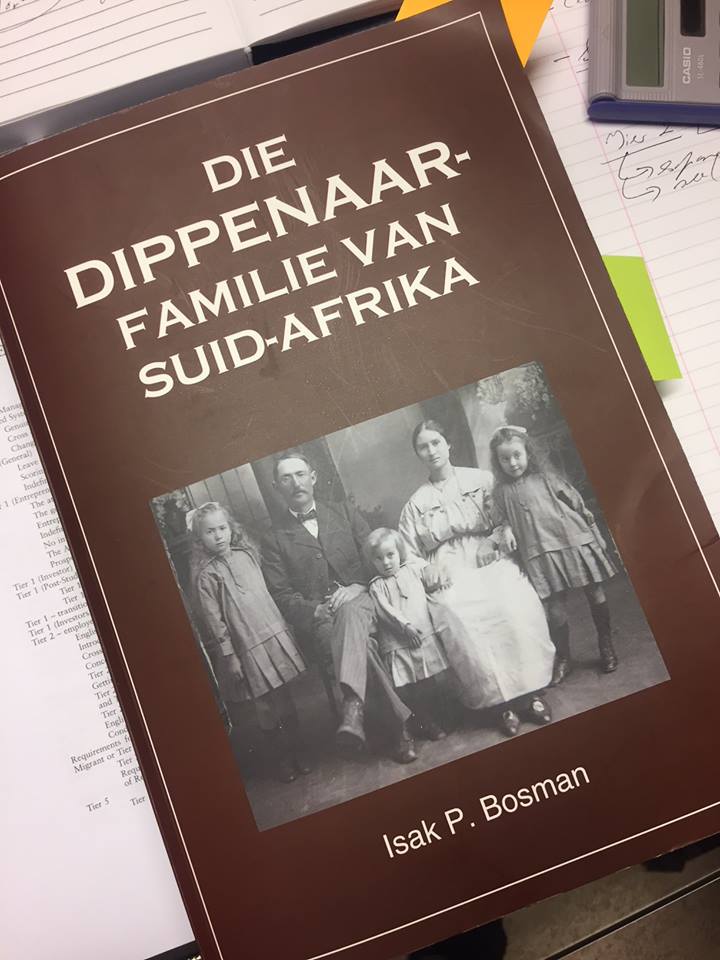
With many thanks to Isak P. Bosman who researched my family tree and authored ‘Die Dippenaar-Familie van Suid-Afrika’.

Daniel Dippenaar, 23 January 2019

Post Brexit Earnings?

What the government would like EU migrants to earn after Brexit could turn out to be wishful thinking. Surely economic realities and needs of the UK will temper unrealistic expectations?

My advice to all concerned is typically British; ‘stay calm’ and ‘get on with it’!

Or if you are Afrikaans speaking; ‘wees rustig en kry jou eendjies in ‘n ry!’ Die VK het mannekrag (en vrouekrag) nodig – behoeftes sal daar altyd wees en op ‘n persoonlike noot; ‘waar daar ‘n wil is, is daar ‘n weg’.

If there is a way, at Depner Immigration Consultants will find one for you. Get in touch with us.

Daniel Dippenaar, 15 December 2018.


(Click on photo to read more.)

EU migrants must earn £30,000 to enter UK after Brexit in major CRACKDOWN on immigration

THERESA May’s Cabinet has outlined plans for a drastic crackdown on EU migrants after Brexit, according to reports. Once the UK leaves the European Union some EU migrants will be required to earn at least £30,000 before they are eligible to enter the country.

By Luke Walker, Sunday Express, 15 December 2018.

Advance NHS charges for overseas visitors comply with the Equality Act

The High Court has ruled that the regulations for charging non-residents in advance for non-urgent NHS treatment are lawful. In R (MP) v Secretary of State for Health and Social Care [2018] EWHC 3392 (Admin), decided yesterday, the court rejected a claim that the government had a duty to consult before introducing advance charging and that it had not complied with the public sector equality duty.
Daniel Dippenaar, 20 December 2018.

The Immigration White Paper

The Immigration white paper setting out post-Brexit immigration system has now been published.

It appears as if immigration matters are moving forward with a sense of urgency?

Depner Immigration Consultants will shortly be commenting on some of the pressing concerns expressed by various institutions. Surely some will benefit from the proposed changes?

Home Secretary Sajid Javid said: “Today’s proposals are the biggest change to our immigration system in a generation. We are taking a skills-based approach to ensure we can attract the brightest and best migrants to the UK.”

Parliament reports: “The Home Secretary confirmed free movement would end after the UK leaves the EU and that to implement this the Government would introduce the Immigration and Social Security Coordination EU Withdrawal Bill. He also announced that there will be a single immigration system for all nationalities. He also confirmed that the UK would introduce a skills based system to attract those who can assist the UK economy.”

If you have the stomach for it you can now read the 168-page white paper (see link below).

Daniel Dippenaar, 20 December 2018.

Immigration White Paper

Depner Immigration Consultants

BREXIT: UK employers must check EU citizens’ right to work in UK

All that is certain at the moment is that here at Depner Immigration Consultants we will have to keep a close eye on immigration policy changes to ensure that our clients’ visa applications are dealt with in accordance with the latest regulations as and when they are amended. White paper expected any day now!
Daniel Dippenaar, 2 November 2018.

BREXIT: UK Employers must check EU citizens’ rights to work in the UK

No wonder that IMMIGRATION has become such an emotional hot topic

Keeping abreast of developments in Immigration Law is a daunting task for lawyers, let alone a lay person attempting to make sense of it all. Unsurprisingly most individuals, sponsors and businesses will approach a specialist barrister, solicitor or qualified consultant to manage their visa application processes.
Daniel Dippenaar, 18 December 2018.

Watch here..